Otomi Bird Design: A Strategic Embroidery Review
First Impression: Handmade Elegance with Cultural Authenticity
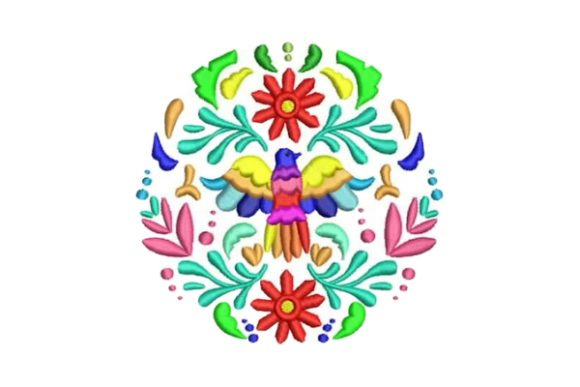
As an embroidery designer who’s developed hundreds of commercial designs for small businesses, my first reaction to the Otomi Bird Design is immediate appreciation — it reads as both handmade and premium. The mention of “Mexican embroidery design” and “decorative floral details” signals deep cultural resonance, while “beautiful satin stitches” confirms a strong technical foundation. This isn’t just decorative; it’s a story-rich motif that conveys warmth, artistry, and intentionality — qualities that resonate powerfully with boutique owners, florists, bakeries, and creative studios building authentic brand identity.
Real-World Business Performance Across Merchandise Types
The Otomi Bird Design shines where small businesses need memorable, scalable branding: on embroidered patches, staff apron embroidery, cap embroidery, and tote bag design. Its balanced composition — a central bird form surrounded by rhythmic floral elements — holds visual weight without overwhelming. On a café apron, it reads clearly at 3.5" wide; on a boutique tote bag, it anchors the side panel with quiet confidence. As a chest logo for a handmade pet brand or local florist, it adds distinction without shouting — ideal for audiences who value craftsmanship over flash.
For uniform applications — think barista shirts, studio staff polos, or bakery smocks — the Otomi Bird Design communicates approachability and care. Unlike generic vector icons, its organic linework and implied texture reinforce a handmade product ethos. When stitched in tonal thread (e.g., sage green on natural canvas), it enhances perceived quality. As a sew-on patch for customer gift bundles or event merch, it doubles as a tactile keepsake — reinforcing brand recall long after the initial purchase.
Where to Use It Thoughtfully — Not Everywhere
While versatile, the Otomi Bird Design demands thoughtful placement. Its decorative floral details mean small patch sizes under 2.25" risk losing definition — especially on curved surfaces like cap fronts or tapered sleeves. High stitch density in the satin-filled areas may cause puckering on lightweight cotton or textured linen unless paired with the right stabilizer. On dark uniforms (navy, charcoal, black), contrast becomes critical: avoid pale yellows or creams unless you’ve tested thread color contrast thoroughly.
Also consider fabric behavior: dense embroidery like this can stiffen delicate knits or crinkle silk-blend scarves — better suited for structured fabrics like twill, canvas, denim, or medium-weight cotton duck. And because it’s a machine embroidery design rooted in tradition, avoid pairing it with ultra-minimalist fonts or stark geometric layouts unless intentional contrast is part of your brand narrative.
Brand Identity Impact: More Than Just a Logo
This isn’t just a pretty image — the Otomi Bird Design actively shapes how customers perceive your business. Its cultural roots in Mexico lend instant authenticity and narrative depth, helping small businesses stand out in saturated markets like Etsy or local artisan fairs. When used consistently across custom apparel, packaging accents, and product labels, it builds visual consistency without feeling repetitive. Customers begin to associate its rhythm and grace with your values: care, creativity, heritage, and attention to detail.
That association builds trust. A well-executed embroidered patch signals investment — in quality, in craft, in your customers. It elevates perceived product value, whether stitched on a $28 tote or a $95 apron. For handmade brands, it subtly reinforces legitimacy: this isn’t mass-produced clipart; it’s a considered digital embroidery file with lineage and intention.
Practical Designer Notes Before You Stitch
Before committing to production, run these checks — every time:
- Test in black and white first. Confirm readability and balance without color distraction.
- Check small-scale legibility. Resize the embroidery file to your smallest intended use (e.g., 2" patch) and verify floral outlines remain crisp.
- Review thread color contrast against your base fabric — especially on darks or heathers.
- Inspect spacing between elements. Tight floral motifs can merge if digitized too densely — look for clean separation in satin-stitched zones.
- Confirm hoop size compatibility with your embroidery machine and intended garment area (e.g., cap frames vs. flat hoops).
- Test on real fabric — not just stabilizer swatches — to assess drape, stiffness, and wash durability.
- Use appropriate stabilizer: cutaway for knits, tear-away for stable wovens, and fusible + tear-away for lightweight silks or linens.
- Create a printable mockup for client approval — show it on actual garment photos, not just white backgrounds.
- Compare beside existing design assets — does it harmonize with your typography, palette, and other design assets?
- Verify commercial licensing before using on small business merch, wholesale items, or client projects.
Final Thought: A Design That Serves Your Business
The Otomi Bird Design isn’t just another machine embroidery design — it’s a strategic asset. When applied with intention, it strengthens brand identity, invites engagement, and adds tangible value to every finished product. Whether you’re an embroidery shop digitizing for local clients, an Etsy seller launching branded totes, or a café owner designing staff uniforms, this motif delivers cultural richness, visual clarity, and professional polish. Just remember: its beauty lies not only in the stitch, but in how thoughtfully it’s placed — and how authentically it reflects the heart of your small business.