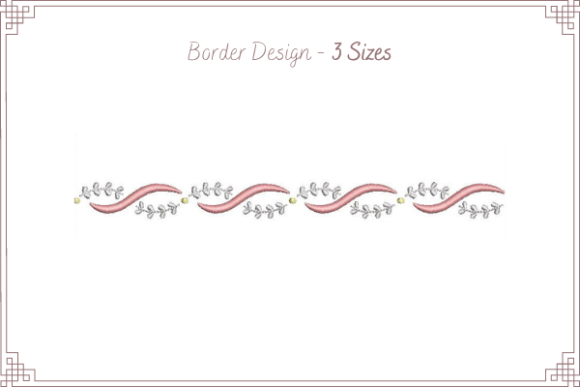
Pillow and Bedsheet Border
A Floral Border That Feels Like Home—Not Just Another Embroidery File
As someone who’s stitched hundreds of borders—from delicate lace motifs to bold geometric repeats—I opened Pillow and Bedsheet Border expecting something pretty, but not necessarily *practical*. What I found was a quietly confident floral border: balanced, breathable, and built for real fabric, not just screen previews. It doesn’t shout. It settles in—like ivy tracing the edge of a linen pillowcase or the gentle curve of a nursery blanket.
First Impressions: Mood, Movement, and Where It Naturally Lives
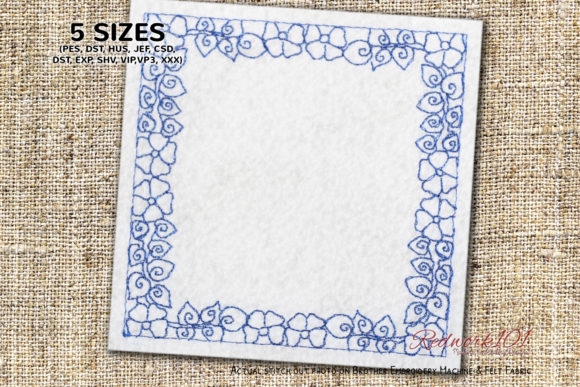
This isn’t a fussy, high-detail applique design with tiny stems and micro-petals. It’s a machine embroidery design with intentional rhythm: soft scrolls, open blossoms spaced just wide enough to avoid visual crowding, and subtle leaf clusters that guide the eye—not compete with it. The layout feels generous without being overwhelming, making it ideal for items where the border *frames*, rather than dominates: pillow covers, bedsheets, tea towels, and even the hem of a lightweight summer apron.
I tested it on a custom linen-cotton blend pillow cover for a boutique client—a neutral oat base with ivory thread. The result? Instant warmth. Customers didn’t say “Oh, nice stitching.” They said, “That looks like something my grandmother would’ve chosen—and I want it *now*.” That’s the quiet power of Pillow and Bedsheet Border: it reads as handmade, intentional, and emotionally resonant—not mass-produced or digitally cold.
Where It Shines (and Where You’ll Want to Pause)
Pillow and Bedsheet Border excels in home decor and soft apparel contexts—but its strength lies in *contextual fit*, not universal application. Here’s how it performed across real projects:
- Tote bags & sweatshirts: Works beautifully along the bottom hem or sleeve cuff—especially on medium-weight cotton or French terry. Avoid placing it directly over thick seams or bulky pockets; the floral flow gets interrupted.
- Baby items & nursery decor: A standout. Stitched on organic cotton swaddle blankets or crib sheet hems, it reads gentle and timeless—not cutesy or dated. Pair with pale sage or dusty rose thread for instant cohesion.
- Embroidered patches & caps: Proceed with caution. The design’s width and gentle curves don’t adapt well to small hoop sizes or rigid cap fronts. It’s better suited to flat, stable surfaces—think patch backs for aprons or tote flaps, not curved visors.
- Holiday or wedding gifts: Surprisingly versatile. On ivory linen napkins or monogrammed guest towels, it adds heirloom weight without seasonal cliché. Just skip red/green thread combos unless you’re intentionally leaning into tradition.
Fabric & Function: Know When to Lean In—or Step Back
Stitch density matters—and Pillow and Bedsheet Border walks a smart line. It uses a mix of satin stitch for petals and smooth fill stitch for leaves, with occasional running stitch accents for lightness. That means:
- Thin or stretchy fabrics? Use tear-away + cut-away stabilizer combo. The design holds shape well, but won’t forgive unstable bases—especially on knits or rayon challis.
- Dark fabrics? Test contrast early. Ivory or ecru thread pops cleanly, but avoid pale yellow or peach on charcoal—they mute rather than lift.
- Frequent washing? The stitch density is moderate—not so dense it’ll stiffen after laundering, nor so sparse it’ll fray. Still, recommend cold wash, low tumble for finished pillow covers or baby sheets.
- Curved or layered surfaces? Skip tight corners or double-layered hems (e.g., folded towel edges). The design’s grace comes from clean, continuous flow—not forced adaptation.
Design Integrity Meets Business Sense
For Etsy sellers and small shop owners, Pillow and Bedsheet Border isn’t just decoration—it’s a subtle trust-builder. When customers see consistent, well-executed borders across your listings (a matching pillow + sheet set, for example), they read *craftsmanship*, not convenience. It elevates a handmade product from “nice” to “worth saving for.”
It also plays well in digital spaces. I used it in printable mockups for a client’s new bedding line—and buyers responded more strongly to lifestyle shots featuring the border than those with generic patterns. Why? Because it signals care in detail, not just speed in production.
Your Practical Checklist Before Stitching
- Test on scrap fabric *first*—especially if using textured weaves (bouclé, waffle weave) or dark backgrounds.
- Review stitch density visually in your embroidery software. Look for any unintended overlaps or thin spots in petal edges.
- Confirm hoop size compatibility. This design assumes standard 5x7" or larger—don’t force it into a 4x4" hoop without editing.
- Inspect small details at 200% zoom: are stem ends cleanly tapered? Do leaf veins read clearly at your intended scale?
- Run black-and-white mockups. If it loses personality in grayscale, reconsider thread contrast.
- Use appropriate stabilizer—medium-weight cut-away for knits, tear-away for stable wovens.
- Verify licensing. Since this is marketed for home decor *and* fashion, confirm whether commercial use (e.g., selling embroidered pillows wholesale) is permitted.
Bottom line? Pillow and Bedsheet Border earns its place in your embroidery project toolkit—not because it’s flashy, but because it’s faithful. Faithful to fabric. Faithful to function. Faithful to the quiet confidence of well-considered design. Whether you’re stitching a single personalized gift or building a cohesive bedroom collection, it doesn’t distract. It belongs.