Wedding Ring Cushion
A Heartfelt Design That Stitches With Purpose
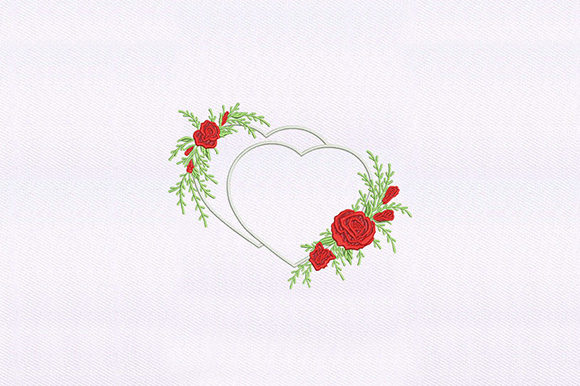
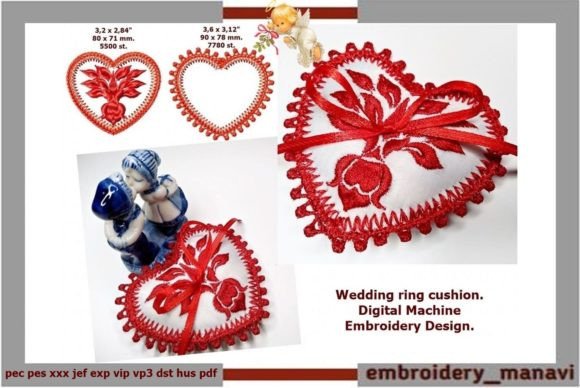
When I first opened the Wedding Ring Cushion embroidery file, I didn’t just see a heart-shaped pillow motif—I saw intention. The floral ornament wraps gently around the central ring space like a quiet vow: delicate but deliberate, romantic without being fussy. It’s not overly ornate, and that’s its strength. As a designer who’s stitched hundreds of wedding-themed pieces—from bridal party robes to keepsake baby blankets—I immediately recognized this as a design built for real use, not just display. It feels handmade in spirit before it’s even stitched.
Where This Design Naturally Lands (and Why)
I recently used the Wedding Ring Cushion to embroider a set of linen pillow covers for a local boutique’s bridal preview event. The result? Customers paused—not just to admire, but to ask where they could order one for their own ceremony. That kind of quiet resonance is rare. It works because the shape anchors the composition (a clean heart), the floral detail adds texture without clutter, and the open center invites customization—think monogrammed initials, a date, or even a tiny heirloom button tucked in after stitching. It’s equally at home on a silk wedding guest book cover, a cotton tea towel for the couple’s new kitchen, or a soft minky baby blanket gifted to the newlyweds’ first child.
Real-World Performance: What Holds Up (and What Needs Thought)
In my test runs across fabric types, the Wedding Ring Cushion held its clarity best on medium-weight woven fabrics—linen-cotton blends, quilting cotton, and midweight twill. On a structured tote bag, the satin stitch petals retained their sheen; on a lightweight sweatshirt, I added tear-away + cutaway stabilizer and reduced top tension slightly—no puckering, no skipped stitches. That said, I’d avoid it on ultra-stretchy knits (like jersey onesies) unless you’re confident with underlay and basting techniques. The floral curves rely on consistent fabric stability to read clearly.
The design’s moderate stitch density makes it forgiving on dark fabric—but only if thread colors are chosen with contrast in mind. I tested it in ivory thread on navy linen: beautiful, yes—but the inner flourishes softened. For maximum impact on deep backgrounds, stick to high-contrast combos (e.g., burgundy thread on cream, or charcoal on oat). And while it’s labeled “In The Hoop,” don’t assume it’s automatically optimized for tiny hoops. Always confirm the required hoop size before digitizing for caps or children’s apparel—it’s better suited to 5x7" or larger hoops for full fidelity.
Where Caution Is Warranted
- Curved surfaces: Not ideal for baseball caps—the heart’s bottom curve distorts easily without careful hooping and foam backing.
- Tiny lettering or add-ons: The center ring area looks elegant empty. Adding small text there risks legibility unless you manually adjust stitch order and density.
- Frequent-wash items: While the fill and satin stitches hold up well, avoid placing it on high-friction zones (like the seat of an embroidered apron) unless you reinforce with a light zigzag over seams post-stitch.
- Layered garments: On double-layered quilted coasters or padded ornaments, test stitch density first—the floral detail can compress and lose definition.
Design Intelligence You Can Trust
What sets the Wedding Ring Cushion apart isn’t novelty—it’s thoughtful execution. The floral ornament uses a balanced mix of satin and fill stitch, with subtle running stitch accents that mimic hand-drawn stems. There’s no unnecessary density; no overlapping layers that cause bulk. That translates directly to customer trust: when your Etsy buyer receives a pillow cover stitched from this design, it reads as professional—not “digitized by someone who’s never held a hoop.” It elevates the entire finished product, whether it’s a $48 boutique pillow or a $12 personalized baby onesie.
For craft businesses, this design quietly supports brand consistency. Its warmth reads as approachable luxury—ideal for shops that sell curated wedding goods, modern nursery decor, or heirloom-style gifts. It doesn’t shout; it invites. And in a crowded digital embroidery marketplace, that kind of restrained confidence stands out.
Your Practical Designer Checklist
- Test the Wedding Ring Cushion on scrap fabric matching your final project’s weight and stretch.
- Review thread color contrast—especially for dark or textured backgrounds.
- Check stitch density visually: zoom in on the floral edges in your embroidery software. Are transitions smooth? No jagged fill lines?
- Confirm hoop size compatibility—don’t guess, measure.
- Inspect small details at actual stitch-out scale: do petal tips read cleanly, or do they blur on fine linen?
- Mock it up in black and white first—this reveals balance issues invisible in color.
- Use appropriate stabilizer: cutaway for knits, tear-away for stable wovens, fusible for lightweight silks.
- Verify licensing terms before selling finished items or bundling the digital embroidery file—commercial use isn’t automatic.
Final Thought: A Design That Serves the Moment
The Wedding Ring Cushion isn’t flashy. It won’t trend on TikTok overnight. But it’s the kind of embroidery file that earns repeat orders from wedding coordinators, gets pinned to “meaningful baby gifts” boards, and sits quietly on a shelf in a well-curated boutique—until someone picks it up, traces the heart with their finger, and says, “Yes. This is the one.” That’s the mark of a truly functional, emotionally intelligent machine embroidery design. It doesn’t just decorate—it connects. And for designers building a craft business rooted in authenticity, that connection is everything.